
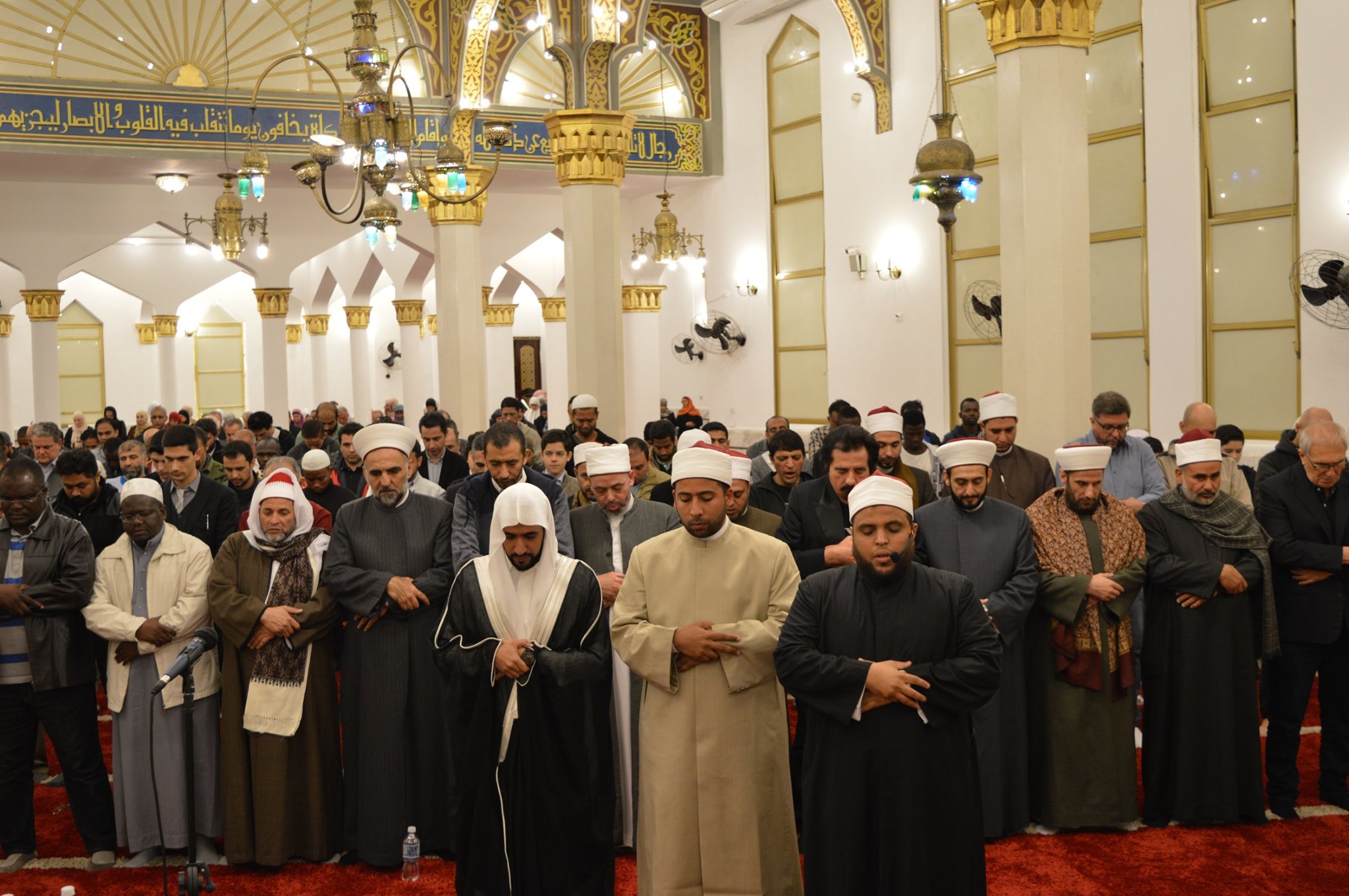
It is surprising to speak of Islam in Latin America, a reality that seems very distant from the Arab world in terms of culture and mentality, customs and habits. However, Muslims have been present on the continent for a long time; just remember the different migratory flows between the late 19th and mid-20th century from Lebanon, Palestine, Syria and the Middle East in general, not to mention the converts in the US who return to their homeland and become propagators.
P. Rafael Savoia
The slaves uprooted from Africa - at least nine million according to Curtin - and sold in the markets of Brazil or the Spanish colonies, brought with them the religion and traditions of the various tribes and regions of origin. After centuries of oppression, they survived in some form with greater or lesser strength, constituting a cultural legacy for people of African descent and for the Americas.
Many slaves came from Islamized African countries, such as the current states of Mali, Senegal, Ghana, and Nigeria. In Hispanic America, every effort was made to contain, control and deny entry to Muslims themselves. Few Islamic surnames and traditions survived.
In Brazil, the memory of slave resistance is still strong in Salvador, where in 1830 a large group had formed and managed to organize and challenge the colonial government in the famous "revolt of the Males," which was bloodily suppressed. As a result, control of black activities increased, including religious activities, which were demonized and policed until the middle of the last century.
A significant number of Arabs arrived in South America around 1850, fleeing the rule of the Ottoman Empire, under the illusion of making a fortune. Lòpez Dusil, an expert on the Middle East and Africa, told the BBC, "They were generally young, poor men engaged in itinerant trade, which did not require a greater knowledge of the language. Syrians and Lebanese settled in Brazil, Venezuela, Colombia, Ecuador and Paraguay, where Palestinians also arrived.
A new wave of migration came with the creation of the State of Israel in 1948, which among other things favored the settlement of Palestinians, especially in Chile. Many of them "mixed" with the local population. One only has to think that the first mosque in Argentina dates back about 20 years to assume that "they are more integrated than we think."
Significantly, several Muslims have reached the highest positions in the various states. They include former Argentine President Carlos Menem, a Syrian son of a Muslim family who converted to Christianity; former Ecuadorian Presidents Abdalà Bucaram and Jamil Mahuad, both of Lebanese descent, as well as Gabriel Turbay, former President of Colombia.
Although it is difficult to establish the exact number of Arabs and Muslims, the Islamic Organization for Latin America estimates the Muslim population in the region at 6 million, equivalent to about 1 percent of the continental population. Ninety percent of Latin American Muslims are immigrants, mostly from Islamic countries, along with their descendants, while ten percent are natives of the region. Brazil is the country with the largest Muslim population, with about 1.5 million people, followed by Argentina, with the second largest regional concentration, reaching 700,0006 . In the case of Chile, the 2002 national census found about 3,000 Muslims.The number of immigrants from Islamic countries has decreased significantly in the last fifteen years, as Latin America no longer presents the same opportunities for immigrants. Thus, the possibilities for the growth of Islam in Latin America depend on the acceptance of Latin Americans who do not come from Islamic countries. In this sense, Islamic institutions in Latin America have based their expansion strategy on finding new followers native to the region.
The Muslim population in Latin America is dense. Most Latin American Muslims live in large urban centers and have managed to build important centers and mosques in the major cities of Latin America. Currently, there are about 80 mosques and about 50 Islamic centers in the region.
Models of Latin American Islam
Isaac Caro, sociologist, PhD in American Studies and academic at the Institute of International Studies at Arturo Prat University in Chile, distinguishes four main models of 'Latin American Islam':
INDO-ASIAN ISLAM
In Latin America, Indo-Asian Islam finds an important space in Guyana, Suriname and Trinidad and Tobago, where the most important Muslim communities are found, constituting between 10 and 15% of the total population. The importance of the communities in Suriname and Guyana is highlighted by the fact that both states are members of the Organization of the Islamic Conference.
The origin of Indo-Asian Islam in the region dates back to the 19th century when, after the abolition of slavery, African workers - many of them Muslims - stopped coming, resulting in a labor shortage. As a result, workers were brought from India and settled first in British possessions - British Guiana (future Guyana) from 1834, Trinidad-Tobabo and Jamaica from 1844 - then in the French West Indies - from 1854 to 1889 - and finally in Dutch Guiana (future Suriname) - from 1836 to 1916. Although the majority of this population was Hindu, it is estimated that about 16% were Muslim. There were also Indonesians from the island of Java who settled in Suriname, the vast majority of whom were Muslims, arriving between 1850 and 1931.
In these three countries, there has been a process of Islamization or Islamic affirmation among the Muslim population, which has been increasing since the Islamic revolution in Iran (1979). In this regard, there have been regular visits by missionaries from India and Pakistan. This Indo-Asian Islam in the Caribbean is of central importance to Muslim communities on the rest of the continent. Muslim organizations and conferences with reach beyond the Caribbean have their origins in these countries, for example: the Islamic Conference of South America and the Caribbean, established in Trinidad and Tobago; the World Islamic League, based in Mecca with regional representation in the Caribbean; and the Islamic Vocational Association, established in Guyana and later Suriname.
ARAB ISLAM
The second model, corresponding to Aab Islam, has a majority presence in South America.
As mentioned above, the Latin American country with the largest concentration of Muslim population and organizations is Brazil. The largest communities are found in São Paulo, Brasília, Rio de Janeiro, Curitiba, Rio Grande do Sul, and Foz de Iguaçu. These communities are mainly made up of descendants of Lebanese, Syrian and Palestinian immigrants, as well as Brazilians converted to Islam. There are about 100 mosques and prayer centers in the country, making Brazil "the capital of Islam in Latin America.
The Venezuelan case is emblematic. There is a Muslim community there, estimated at 90,000 people, which can be explained in part by the fact that Venezuela is a member of the Organization of Petroleum Exporting Countries (OPEC) and therefore has special ties with the producing countries of the Muslim world. With financial help from the government of Saudi Arabia, also an OPEC member, the Ibrahim Mosque, considered one of the largest in Latin America, was inaugurated in Caracas in April 1993.
NEW MUSLIMS
In Latin America there is a growing process of conversion to Islam through the formation of "new Muslims" or converts to Islam, through a conversion that usually comes from Christianity and is the result of a reaction or protest against Western Christian society. In this sense, the formation - as in the United States - of a black Muslim movement, which finds its expression in part of the Afro-Latin American population, is part of this process.
RADICAL ISLAMISM
With regard to the potential or actual existence of Islamic currents in Latin America, it should be pointed out that this is a minority phenomenon - although it is not unimportant for this reason - and does not affect Islam or the Muslim population of the region as a whole. Three processes and periods can be distinguished, with a coincidence between their starting points and certain terrorist attacks. The first period began in 1992, when the attack on the Israeli Embassy in Buenos Aires occurred, and was consolidated in 1994, when the attack on the AMIA-DAIA building occurred. In this first phase, several intelligence reports denounced the existence of groups linked to Hezbollah across the so-called "triple border" of Argentina, Paraguay and Brazil.
A second phase occurred after September 11, 2001, when U.S. intelligence also began to report the presence of al-Qaeda, both in the triple border area and in other South American countries.
A third period followed the attacks in Spain in March 2004. The Argentine press reported that local intelligence services, alerted by their Spanish and Italian counterparts, had detected five groups, consisting of 26 people, from the Jamaat Tabligh movement, who had entered Argentina with the possible aim of contacting and recruiting Argentine citizens from the Muslim community to be trained abroad in terrorist activities.
Islam in Colombia - Buenaventura
In Colombia, the phenomenon of black Muslims is particularly interesting in the port city of Buenaventura. Initially attracted by the faith of the promises of black power, the Muslims of Buenaventura claim to have found in Islam a refuge from the poverty and violence that plague the city.
Islam arrived there in the late 1960s through Esteban Mustafa Meléndez, an African-American sailor from Panama, who spread the teachings of the Nation of Islam-a U.S.-born group that blends elements of Islam with black nationalism-among the dockworkers.
The first wave of conversions was more political than spiritual. In their prayers (in English or Spanish) they read more political pamphlets than the Koran, and had a precarious grasp of the central tenets of Islam, Valencia says.
Following the example of Malcolm X - who broke with the Nation of Islam and embraced Sunnism before his death in 1965 - a member of the Buenaventura community traveled to Saudi Arabia to study Islam and returned to convince the group to embrace a more orthodox faith. Buenaventura's Muslim community turned to Sunni groups in the country for support, but these two worlds couldn't be more different.
Buenaventura is home to the third largest Muslim community in the country after those in Maicao and Bogota, and its existence "for almost four decades makes it an obligatory reference point in the study of the presence of Islam in Colombia," according to Diego Giovanni Castellanos. Even within Colombian Islam, they are the only predominantly Shiite community in the country, with Sunnism being the predominant trend elsewhere.
This Muslim community is unlike any other in the world. It is made up of and strengthened by Afro-descendants converted to Islam, all of whom are native to Colombia.